Understanding Evidence Needed For a Successful Car Accident Lawsuit
Understanding Evidence Needed For a Successful Car Accident Lawsuit

.webp)
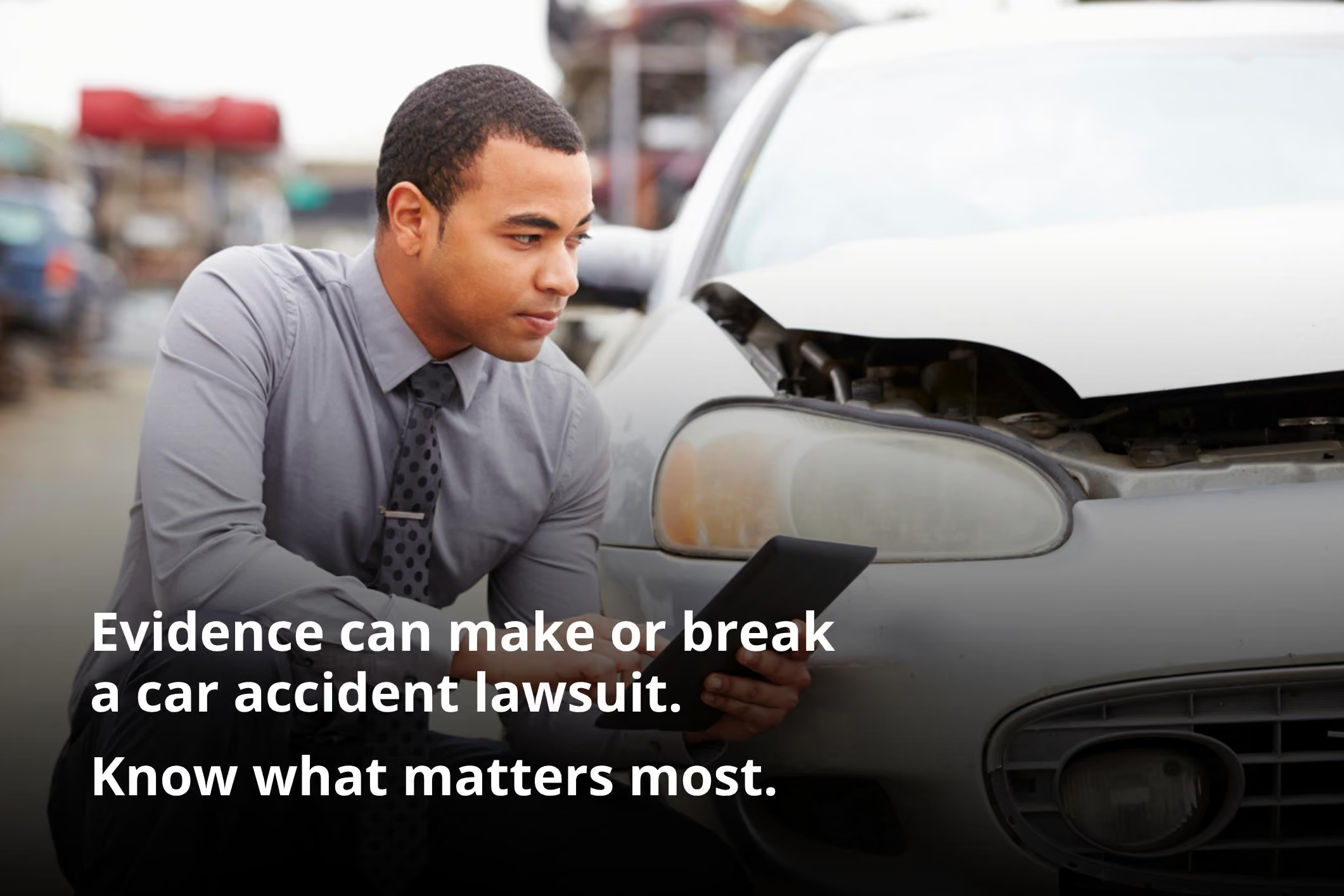
A car accident lawsuit is built on evidence. The strength of that evidence often decides whether you recover full compensation, partial compensation, or nothing at all.
Without solid documentation tying the other driver's negligence to your injuries and losses, even a legitimate claim can fall apart against an insurance company looking for any reason to reduce its payout.
Here are 7 types of evidence needed for a successful car accident lawsuit that can protect your case from the start.
If you were hurt in a Virginia car accident, call Smith Law Center at (757) 244-7000 or contact us online to discuss what happened.
1. Police Reports and Official Documentation
The police report is one of the first pieces of evidence in any car accident case. Officers responding to the scene document the location, the parties involved, witness information, weather and road conditions, visible damage, and their initial assessment of what happened.
The report may also note traffic citations issued, which can directly support a claim of negligence against the other driver.
Beyond the police report, other official records may strengthen your case. Emergency response logs, 911 call recordings, and incident reports filed by businesses or property owners near the scene can provide additional detail about the moments before, during, and after the crash.
2. Medical Records
Medical documentation is one of the most important parts of a car accident lawsuit. Without clear records connecting your injuries to the crash, the insurance company will argue your condition was caused by something else, was pre-existing, or is not as serious as you claim.
Understanding what evidence is needed for a car accident injury claim starts with medical records, because they create the timeline that ties your injuries directly to the crash.
Strong medical evidence usually includes:
- Emergency room records from the day of the accident;
- Imaging results such as X-rays, CT scans, and MRIs;
- Notes and evaluations from specialists, including neurologists, orthopedic surgeons, and physical therapists;
- A complete record of ongoing treatment, prescriptions, and rehabilitation; and
- Documentation of any future medical care you will need.
Some of the most serious injuries from a car accident do not show up immediately. Concussions, whiplash, and traumatic brain injuries can develop hours or days after the crash. Seeing a doctor right away and following through on every recommended appointment creates the medical timeline your case depends on.
3. Photos and Video Capture Car Accident Evidence Words Cannot
Visual evidence captures what words alone cannot. If you or someone with you was able to take photos at the scene, those images often become some of the most persuasive evidence in the case.
Useful photos and video may include:
- The position of the vehicles immediately after the crash;
- Damage to all vehicles involved;
- Skid marks, debris, and other physical evidence at the scene;
- Traffic signs, signals, and road conditions;
- Weather and lighting at the time of the crash; and
- Visible injuries, including bruising and swelling.
Visible injuries often look worse two or three days after the crash than at first. Continuing to photograph injuries during recovery shows how the damage progressed and supports the seriousness of what you went through.
Surveillance footage can also play a major role. Nearby businesses, traffic cameras, residential doorbell cameras, and dash cams often capture critical moments. This footage can disappear quickly, sometimes within days, so acting fast to identify and preserve it matters.
Hear From a Smith Law Center Client
Dr. Renforth is an emergency room physician who has treated countless crash victims throughout his career. After being rear-ended in a serious collision, he stayed at the scene helping others until EMS arrived. The next day, he woke up in severe pain.
When the insurance company failed to cover what he needed after the crash, he contacted Smith Law Center. Samantha Cohn and the team stepped in so he could focus on recovery instead of fighting with insurers.
In the video below, Dr. Renforth shares his experience working with Smith Law Center after a serious car accident.
4. Witness Statements
Witness testimony adds independent support to your version of events. A bystander who watched the crash unfold has no stake in the outcome, which makes their account valuable to a jury and persuasive to an insurance company.
Strong witness evidence may include:
- Names and contact information for everyone who saw the crash,
- Written or recorded statements describing what they observed,
- Statements from passengers in either vehicle, and
- Accounts from people who arrived shortly after the crash and saw the immediate aftermath.
If you collected names and phone numbers at the scene, give them to your attorney as soon as possible. Memories fade, witnesses move, and contact information becomes harder to track down with each passing week.
Building a successful car accident lawsuit takes more than a police report and a few photos. It takes a legal team that knows how to gather, preserve, and present the evidence that wins cases. Contact Smith Law Center at (757) 244-7000 to speak with an experienced Virginia car accident attorney about your case.
5. Expert Analysis and Reconstruction
In serious car accident cases, expert testimony often becomes essential. Insurance companies and defense attorneys regularly bring in their own experts to challenge fault, dispute injury severity, or argue that something other than the crash caused your damages. Countering those arguments requires qualified experts on your side.
Common experts in car accident lawsuits include:
- Accident reconstruction specialists, who analyze physical evidence, vehicle damage, and scene measurements to determine how the crash actually happened;
- Medical experts, who explain the nature and long-term consequences of your injuries;
- Biomechanical engineers, who assess how the forces of the collision caused specific injuries; and
- Economists and life care planners, who calculate the future cost of medical care, lost income, and reduced earning capacity.
Expert testimony is especially important in cases involving brain injuries, spinal cord injuries, and other catastrophic harm where the long-term impact is significant and the defense is likely to fight every dollar.
6. Financial Records
Compensation in a car accident lawsuit covers more than medical bills. Lost income, reduced earning capacity, and out-of-pocket expenses are also part of what you can recover, and documenting those losses takes paperwork.
Helpful financial evidence may include:
- Pay stubs, tax returns, and employer statements confirming missed work;
- Records of bonuses, commissions, or overtime you were unable to earn;
- Receipts for prescriptions, medical equipment, and transportation to appointments; and
- Documentation of home modifications or in-home care required because of your injuries.
For people whose injuries permanently limit what they can earn, vocational expert testimony combined with financial records can demonstrate the full long-term financial impact.
7. Personal Documentation of Your Recovery
A personal record of your day-to-day recovery often becomes one of the most powerful pieces of evidence in a car accident case. Insurance companies are skilled at reducing injuries to a list of medical codes. A daily journal puts a human face on what those codes actually mean.
Keep a written record of:
- Pain levels throughout the day;
- Activities you could not do or had to modify;
- Missed events, work obligations, and time with family;
- Emotional effects, including anxiety, sleep disruption, and frustration with the recovery process; and
- Conversations with medical providers and what they told you.
This kind of documentation supports claims for pain and suffering, mental anguish, and loss of enjoyment of life in a way that medical records alone cannot.
What Happens If Evidence Is Missing or Disputed?
Disputed fault is common in Virginia car accident cases, especially because Virginia follows a strict contributory negligence rule. If the insurance company can convince a jury that you were even slightly responsible for the crash, you may be barred from recovering compensation.
Insurance companies know this and frequently look for inconsistencies in statements, gaps in medical treatment, conflicting witness accounts, missing footage, or incomplete evidence to shift blame onto the injured driver.
Police reports can contain mistakes. Surveillance footage may be erased. Witness memories can change over time.
Early investigation becomes extremely important in these cases. A car accident attorney can work to preserve evidence, locate witnesses, review crash scene details, obtain expert analysis when needed, and respond quickly to allegations that you caused or contributed to the accident.
Talk to a Virginia Car Accident Attorney Today
A successful car accident lawsuit comes down to the strength of the evidence and the skill of the attorneys presenting it. The evidence needed for a successful car accident lawsuit rarely comes together on its own. It takes investigation, preservation, expert support, and strategic preparation from day one.
Smith Law Center has decades of experience building Virginia car accident cases, including those involving traumatic brain injuries, spinal cord damage, and other catastrophic harm. Founder Stephen M. Smith's background in brain science gives the firm a unique edge in cases where injuries are serious and the stakes are high.
Call Smith Law Center at (757) 244-7000 or contact us online to schedule a free case review with an experienced Virginia car accident attorney.
About Smith Law Center