Soft Tissue Injuries After Car Accidents: Understanding Your Rights
Soft Tissue Injuries After Car Accidents: Understanding Your Rights

.webp)
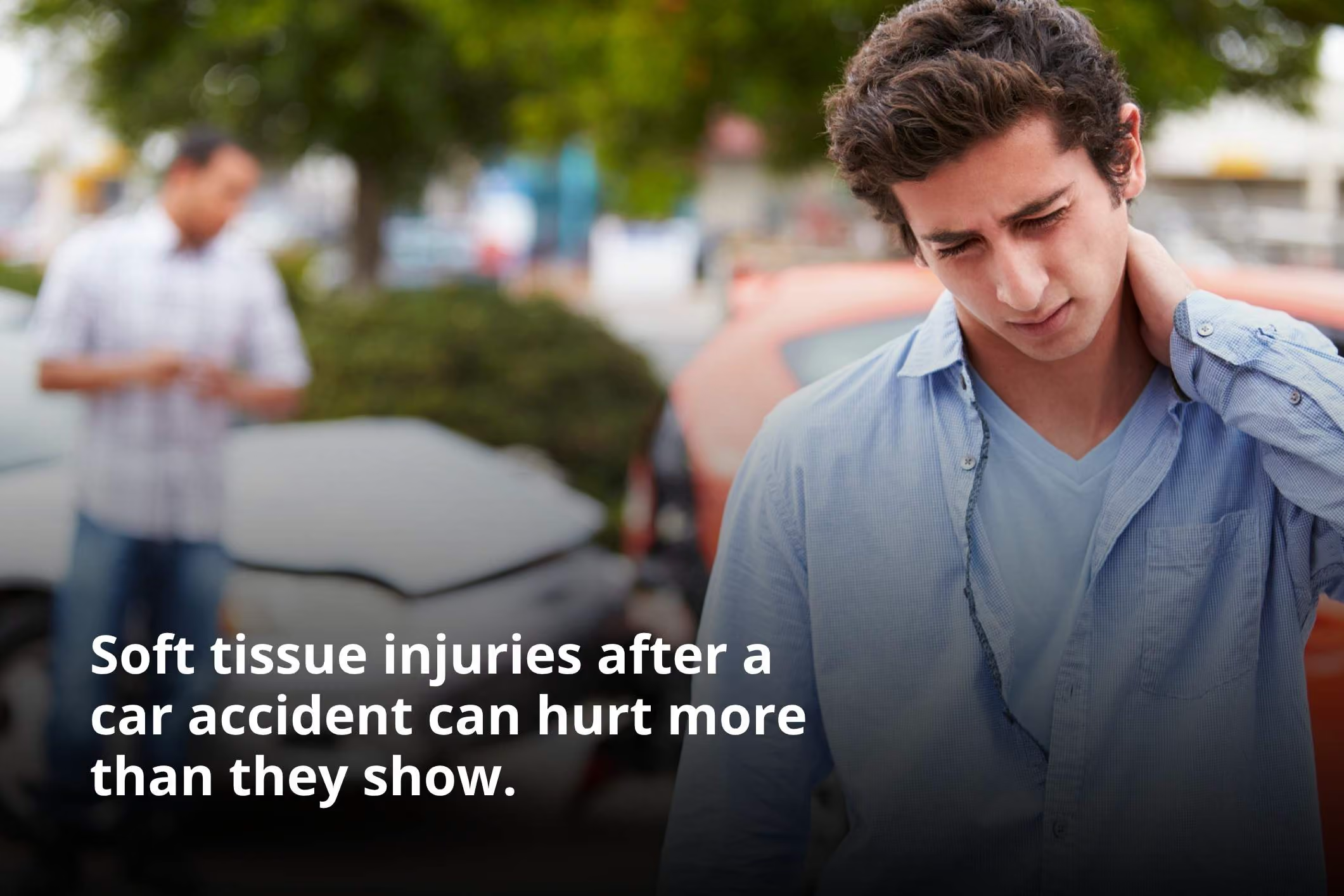
A car accident can throw off your day in an instant. Once everything settles down, it's natural to check yourself for obvious injuries and make sure everyone is okay. If you don't see any cuts or broken bones, you might assume you walked away without getting hurt.
But the next morning, waking up is a different story. Your neck feels stiff, your shoulders throb, and a deep ache makes it hard to turn your head. These are classic signs of a hidden medical issue. You do not have a broken bone, but your body is still deeply hurt.
A soft tissue injury can affect your life long after the crash is over. If you're dealing with pain and questions about what comes next, the team at Smith Law Center is ready to help. For more than 75 years, our family-run firm has stood up for injured people, recovering more than $1 billion in settlements and verdicts nationwide. Call (757) 244-7000 or contact us online to schedule your free consultation.
What Are Soft Tissue Injuries?
Soft tissue injuries affect the parts of your body that hold everything together and allow you to move. This include:
- Muscles
- Ligaments
- Tendons
- Nerves
- Blood vessels
- Fat
- Other connective tissues.
These injuries occur when the force of a collision stretches, twists, compresses, or tears these tissues. Even crashes at lower speeds can put enough stress on your body to cause damage.
Many people assume these injuries are minor because they don't involve broken bones or obvious wounds. In reality, soft tissue injuries can lead to ongoing pain, limited mobility, headaches, muscle weakness, and other problems that interfere with everyday life if they are not properly treated.
Another challenge is that soft tissue damage usually doesn't appear on a standard X-ray. While imaging tests such as an MRI or ultrasound may help identify certain injuries, doctors often diagnose soft tissue injuries by reviewing your symptoms, examining the affected area, and monitoring how your condition changes over time.
That's why it's important to take new or worsening pain seriously, even if your initial emergency room visit didn't reveal a broken bone.
Examples of Soft Tissue Injuries
Soft tissues exist everywhere in your body, which means these injuries can happen in many different areas. Here are the most common examples that people experience after a vehicle collision:
- Whiplash: One of the most common injuries after a car accident, whiplash happens when the head is forced forward and backward quickly. This sudden motion can stretch or tear the muscles, ligaments, and tendons in the neck and upper back.
- Sprains: A sprain occurs when a ligament is stretched or torn. Wrists, ankles, knees, and thumbs are especially vulnerable during a collision.
- Strains: Strains affect muscles or tendons, which connect muscles to bones. They often happen when the body braces for impact or is forced into an unnatural position during the crash.
- Contusions (Deep Bruises): The force of a seat belt, airbag, steering wheel, or door can damage muscles and small blood vessels beneath the skin, causing painful bruising and swelling.
- Shoulder Injuries: The shoulder can absorb a significant amount of force during a collision, leading to injuries such as rotator cuff tears, shoulder impingement, or damage to surrounding muscles and tendons.
- Cuts and Lacerations: Broken glass, deployed airbags, and loose objects inside a vehicle can cause cuts that damage the skin and the soft tissue beneath it. Some may require stitches and can leave lasting scars.
- Tendonitis or Bursitis: In some cases, the trauma from a crash can irritate tendons or inflame the small fluid-filled sacs that cushion your joints, leading to pain, stiffness, and reduced range of motion.
Soft Tissue Injury Car Accident: The Physics Behind Your Pain
You don't have to be involved in a high-speed crash to suffer a soft tissue injury. Even a collision at lower speeds can put enough force on your body to stretch or tear muscles, ligaments, and tendons.
Different types of accidents can cause injuries in different ways. For example, rear-end collisions often cause whiplash because the head and neck are thrown forward and backward in a matter of seconds.
Meanwhile, in head-on crashes and T-bone accidents, the sudden impact can strain the shoulders, back, knees, and other joints as your body braces against the force. Even a quick stop or sharp change in direction can place more stress on your soft tissues than they are designed to handle.
Your seat belt and airbags are designed to protect you from life-threatening injuries, and they do exactly that. But they can't stop every movement your body makes during a collision. As your vehicle comes to a sudden stop, your body continues moving until it is restrained, placing significant stress on muscles, ligaments, tendons, and other connective tissues. That's why soft tissue injuries are among the most common injuries people experience after a car accident.
After a car accident, it’s common to think, “I feel okay, I’ll be fine.” A lot of people take that approach and don’t see a doctor right away. The problem is that soft tissue injuries don’t always show up immediately, and waiting can make it harder to connect your symptoms to the crash later on. Getting checked early helps document what’s going on and gives you a clearer picture of your condition.
If you’re starting to notice pain, or just want to better understand what’s normal after a collision, the attorneys at Smith Law Center are here to answer your questions. Call (757) 244-7000 or reach out online today.
Symptoms You Should Never Brush Off
It is incredibly common for people to ignore their symptoms right after a collision. You might think you are just a little stiff or that the pain will fade on its own. Ignoring these signs can be dangerous for your health and your legal rights.
Watch out for these common symptoms of a soft tissue injury:
- Stiffness that makes it hard to turn your head or bend your back
- A dull, constant ache in your shoulders, upper back, or arms
- Numbness, tingling, or a "pins and needles" sensation traveling down your arms or legs
- Frequent headaches that start at the base of your skull
- Swelling, heat, or visible redness around a specific joint
Seeking immediate medical attention is vital. A doctor can properly evaluate your condition and document the damage immediately after the collision. This creates a clear timeline linking your physical condition directly to the crash.
Whiplash symptoms often don’t appear right away. In fact, many people begin to notice pain, stiffness, or reduced range of motion 24 to 48 hours after a crash.
Handling Insurance Company Pushback After a Soft Tissue Injury Car Accident
Insurance companies evaluate claims with their financial exposure in mind, which can affect how they will respond to your injury case.
Because soft tissue damage cannot be seen on an X-ray, insurance adjusters often use this lack of visual proof to cast doubt on your claim. They might claim that your injury is not severe, or they may argue that your pain comes from an old injury rather than the wreck.
They also watch your behavior closely. If you waited several days to see a doctor, or if you skipped a physical therapy appointment, the insurance company will use that gap in treatment to argue that you are not truly hurt. They want to settle your claim as quickly and cheaply as possible before the full extent of your soft tissue injury becomes clear.
Compensation Available in a Soft Tissue Injury Car Accident Settlement
When you are managing a severe sprain or a torn ligament, the costs add up quickly. A proper legal claim helps you recover the funds needed to pay for your past and future medical bills, physical therapy, prescription medications, and the wages you lost while missing work. It also covers the physical discomfort and loss of enjoyment in daily life caused by your injuries.
An experienced attorney helps you build a solid case by gathering your full medical records, securing specialist opinions, and ordering advanced imaging if needed. Your legal team handles all communications and negotiations with the insurance adjusters so you can focus entirely on your physical recovery.
If the insurance provider refuses to offer a fair soft tissue injury car accident settlement, your lawyer should be fully prepared to take your case to trial to get results.
Smith Law Center Takes Soft Issue Injuries Seriously
At Smith Law Center, we don’t treat these injuries as an afterthought. For more than 75 years, our family-run firm has represented people dealing with serious injuries that aren’t always easy to see on paper but are very real in everyday life.
With over $1 billion recovered for clients and a legal team built on three generations of courtroom experience, we know how to present these cases in a way that reflects their true impact, not just how they appear at first glance.
Insurance companies often focus on what can be measured quickly. We focus on the full picture, including how your injury affects your day-to-day life and long-term well-being.
If you’re dealing with pain after a crash and unsure what to do next, you don’t have to sort it out alone. Call (757) 244-7000 or contact us online to schedule a 100% free, private case review.
About Smith Law Center