What Does Deadhead Mean in Trucking?
What Does Deadhead Mean in Trucking?

.webp)
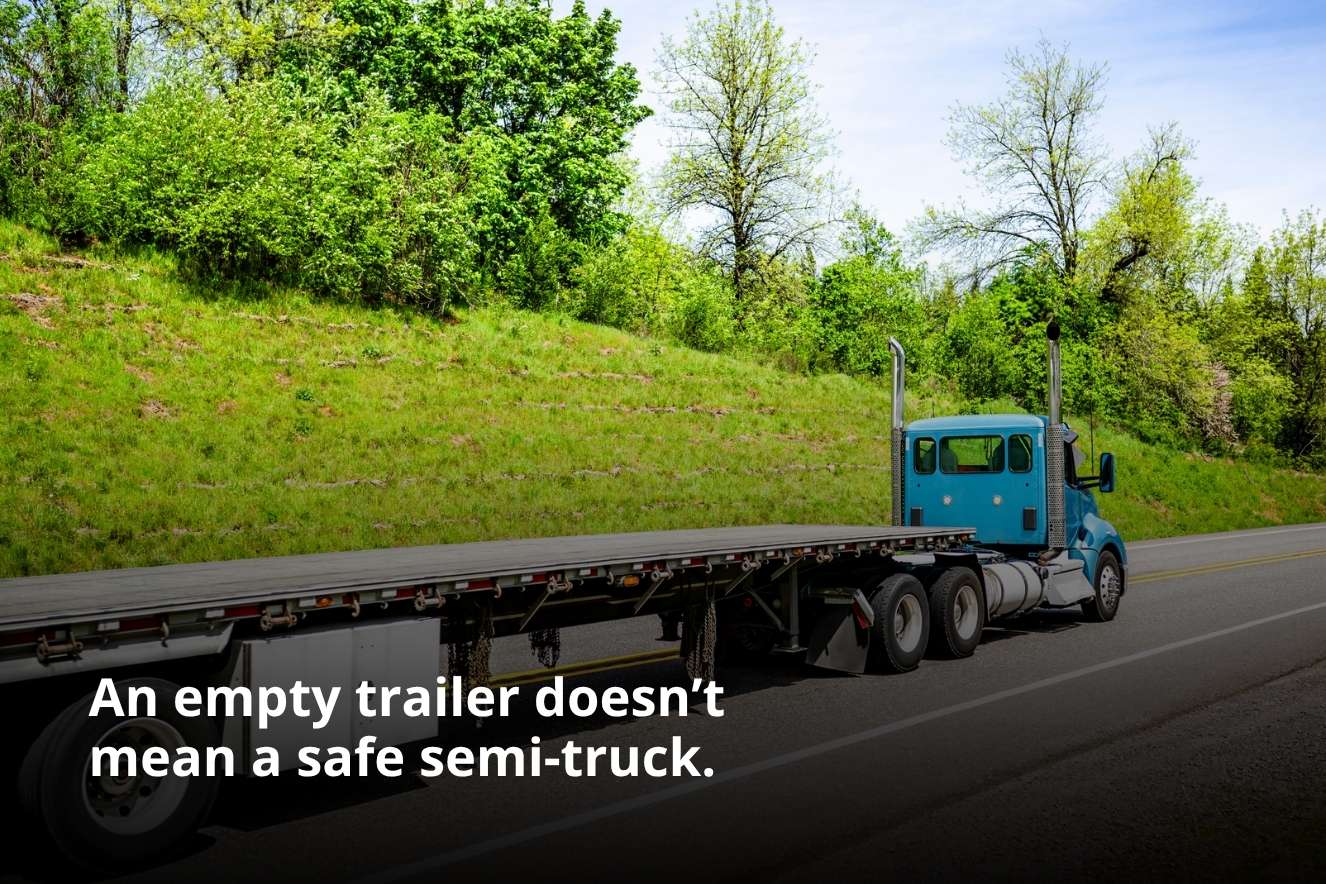
An empty truck may seem like one less thing to worry about on the highway. But when an 18-wheeler travels without a load, its handling can change in ways that affect everyone sharing the road. These trips, known as deadhead trucking, are a routine part of the trucking industry, yet they can create risks that other drivers may not expect.
What does deadhead mean in trucking, and why does it matter after a crash? Understanding how an unloaded truck behaves can help explain what went wrong and whether the driver or trucking company may be responsible.
If you or someone close to you has been injured in a truck accident, Smith Law Center can help you understand your legal options.
Call (757) 244-7000 or fill out our online form to speak with a team from a family-run firm that has helped injured people for generations.
What Is Deadhead In Trucking?
What does deadhead mean in trucking? Simply put, deadheading happens when a commercial truck driver hauls an empty trailer from one location to another.
When a driver drops off a load of cargo at a warehouse, they do not always have a new shipment waiting at the same spot. To pick up their next load, they might have to drive hundreds of miles with nothing inside the trailer. During those miles, the rig is operating in "deadhead" status.
Trucking companies and independent drivers dislike deadheading because empty miles do not generate revenue. The driver still burns fuel, incurs wear and tear on the truck, and spends valuable driving hours behind the wheel, all without getting paid for hauling freight.
Deadhead Trucking Meaning Is Different From Headhaul vs. Backhaul
To what is deadhead in trucking, it helps to look at what happens before and after a truck delivers its cargo. Truck drivers often travel through several stages to move goods from one place to another, and not every mile involves a full trailer.
- Headhaul: This is the trip that carries a load from its pickup point to its destination. For example, a truck hauling furniture from Texas to Oklahoma is making a headhaul trip.
- Backhaul: After delivering the furniture in Oklahoma, the driver might pick up a new load of building supplies to transport back toward Texas. This return trip is called a backhaul. Although the rate may be lower than the original haul, carrying another load allows the driver or trucking company to earn money on the return journey.
- Deadhead: If the driver cannot find another load in Oklahoma, they may need to travel toward Texas with an empty trailer. This is known as deadheading, and it can change how the truck responds to steering, braking, and sudden movements.
Deadheading enters the picture when a driver cannot secure a backhaul load. Rather than waiting around for days at a truck stop, the driver decides to hit the road empty. That decision changes how the rig handles on the road.
When an empty or loaded semi-truck causes a serious crash, trucking companies send their risk management teams immediately. You deserve experienced legal advocates on your side, too. Founded in 1949, Smith Law Center has recovered over $1 billion for injury victims across the country, including landmark verdicts in catastrophic injury cases.
If you have questions about a recent accident, call us directly at (757) 244-7000 or fill out our online form for a clear, straightforward conversation about your options.
Why Is Deadhead Trucking Dangerous?
It seems counterintuitive, but an empty tractor-trailer can be more hazardous to drive than a fully loaded one. The deadhead meaning in trucking extends beyond empty cargo bays—it carries specific physical and behavioral risks on the open road.
Reduced Traction and Braking Instability
Commercial big rigs are designed and engineered to carry heavy weight. A fully loaded semi-truck can weigh up to 80,000 pounds, which presses the tires firmly onto the pavement and creates steady friction. An empty trailer weighs closer to 20,000 to 30,000 pounds.
Without heavy freight weighing down the rear axles, the tires have significantly less grip on the road surface. This lack of traction makes it much easier for an empty trailer to skid, slide, or jackknife, especially on wet or icy roads.
Greater Risk of Swaying and Rollovers
An empty trailer can also be more vulnerable to sudden movements. Without cargo weighing it down, the trailer may respond differently to sharp turns, uneven pavement, or abrupt steering. In some situations, these movements can cause the trailer to sway or contribute to a rollover.
These risks can increase when a driver takes a turn too quickly or makes a sudden maneuver to avoid a hazard. A tractor-trailer that tips onto its side can crush nearby vehicles, scatter debris across the road, and cause serious injuries to people who have little time to react.
Susceptibility to Strong Crosswinds
An empty box trailer can act like a large sail in strong winds. Gusts can push against its broad side, causing the truck to drift into another lane or making it harder for the driver to maintain control. In severe conditions, strong crosswinds can also contribute to a rollover.
Experienced drivers should adjust their speed to the weather and recognize when conditions call for stopping in a safe place. If a driver continues at an unsafe speed despite high winds or ignores warnings about dangerous conditions, that decision may become an important factor in determining responsibility after a crash.
Speeding, Fatigue, and Driver Experience
Deadheading can also create pressure to reach the next pickup location quickly. Since an empty trip does not generate freight revenue, some drivers may feel tempted to speed, drive while tired, or rush through changing weather conditions. However, drivers must still follow safety rules and required rest periods, whether their trailers are full or empty.
Experience matters, too. A driver who does not understand how an empty trailer responds to braking, steering, and wind may struggle to react safely when conditions change. Speeding or poor judgment can make these problems worse, leaving less time to avoid a collision.
Empty semi-trucks are 2.5 times more likely to crash than fully loaded big rigs. Without tens of thousands of pounds of cargo pressing the tires into the asphalt, these trucks have less traction, slide more easily on wet roads, and are far more vulnerable to strong crosswinds.
How a Trucking Accident Lawyer Can Help You
Truck accident cases are far more complex than ordinary car crashes. Determining the deadhead trucking meaning in the context of an accident investigation requires looking deep into fleet records, driver logs, and electronic data.
A legal team can protect your interests by taking concrete actions after a collision:
- Securing the "Black Box" Data: Commercial trucks carry Electronic Control Modules (ECMs) that record speed, braking events, and driving hours. Uncovering this data before it gets overwritten is critical.
- Reviewing Dispatch and Payload Logs: Logs reveal whether the trailer was empty, where the driver was headed, and whether the trucking firm placed unreasonable time demands on the driver to finish an unpaid leg.
- Checking Maintenance Records: Empty trailers place different stresses on braking systems and suspension parts. Examining service logs shows whether the fleet maintained proper safety standards.
- Gathering Evidence: Taking photos of injury progression, preserving physical evidence, keeping a detailed daily journal of your physical recovery, and steering clear of insurance adjusters seeking recorded statements are practical steps that strengthen a claim.
Trucking carriers and their insurers work quickly to limit their financial exposure. Having a courtroom-ready legal team ensures your rights are protected every step of the way.
Empty Rigs Still Carry Heavy Responsibilities
When a multi-ton semi-truck rolls down the highway without cargo, the trailer may be empty, but the driver’s duty to keep you safe on the road remains fully loaded. Unpaid miles, light axles, and crosswinds do not excuse reckless driving or skipped rest breaks.
For over 75 years, the three-generation family at the Smith Law Center has helped crash victims uncover the truth behind complex commercial vehicle accidents. With more than 300 years of combined experience, our firm has the trial-tested strength to hold negligent trucking companies accountable.
If an empty big rig injured you, you do not have to carry the legal weight on your own. Call Smith Law Center today at (757) 244-7000 or fill out our online form to talk about what happened and learn how we can help you move forward.
About Smith Law Center